
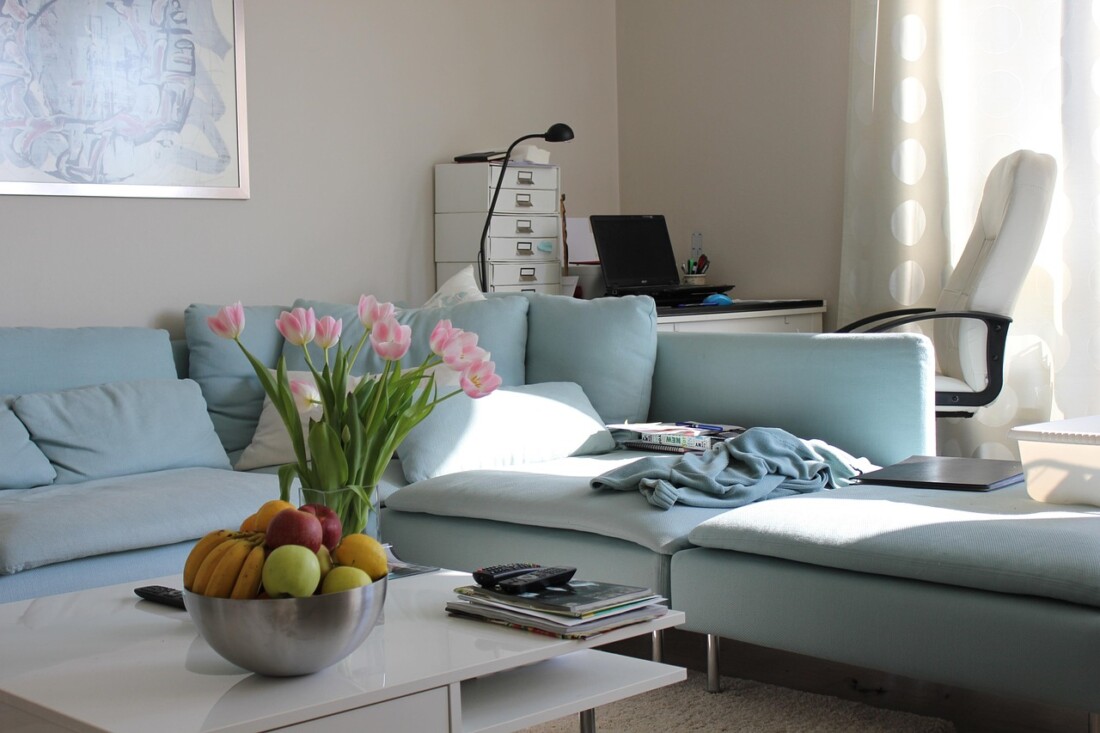
If you’re like most lovers of beautiful home design, you may have one or more signature pieces that you wouldn’t trade for all the world.
Think a gorgeous sofa, a hand-knotted Persian rug, or a mid-century armchair that sparks conversation and even a discussion of history. As timeless as these pieces are, they form part of a whole, in which everything from your accessories to your wall paint needs to complement or contrast one another to create an appealing ambience. If your walls need a new coat of paint and you’re considering changing or enhancing your colour scheme, there is a small but vital set of considerations to keep in mind.
Decide on a Decor Style
Many trends may be competing for your attention, including styles like maximalism, which involves combining bold colours, mixed patterns, rich textures, and curated collections of decor items that showcase your personal history and personality. However, if you are worried about being overwhelmed or you prefer a more minimalist or neutral feel, it can help to build your palette around two or three signature pieces. Your sofa, dining table, and rugs may be the most expensive elements in your room. Identify their dominant colours and use them as a foundation, then decide whether to opt for complementary or contrasting colours for your walls. When discussing paint colours with your painter or decorator, you may settle on white or light neutral hues that reflect light. Finishes matter, too. Matte finishes, for instance, absorb rather than reflect light, but they also create a calmer ambience by diffusing light more evenly and reducing glare in brighter rooms. However, if you are decorating darker or smaller rooms, glossier paints can make them seem larger and more luminous.
Taking Cost into Account
Practicalities like ease of cleaning are vital when choosing colours and finishes. For instance, matte hides imperfections but marks easily. Eggshell and satin finishes, meanwhile, are easier to wipe, especially in busy areas like dining rooms and hallways. Your colour choice impacts painting costs. Some colours and brands require more layering, so it pays to discuss these considerations with your painting professionals.
Reading Undertones and Temperature
Two neutral tones can clash unpleasantly if one has yellowish (warm) undertones and the other has cool (pink or bluish) ones. If you have warm furniture (in materials such as honey oak, terracotta, camel, or cream), consider warm wall options such as soft white with a slight yellow tint, greige, warm taupe, clay, or terracotta. Cool furniture in charcoal, blue, black, white lacquer, or grey oak, meanwhile, goes best with cooler walls in colours such as soft greige, stone, sage, blue-grey, or true white.
Relying on a Simple Colour Formula
A helpful way to balance your room is the 60-30-10 approach, which comprises one main colour, a secondary colour, and an accent colour. Choose the colour group your irreplaceable furniture belongs to (the 30%), then transform your walls into the 60% that gently supports it (it can be from the same family, but be lighter or darker) or frames it (the colour can be contrasting but still complementary). The remaining 10% should be subtle accents that don’t overpower the scheme. Note that the same paint can look different in the morning, midday, and at night. Therefore, test your colours on your wall, close to your furniture. Paint two or three large swatches, then place your furniture or accessories next to them, checking at different times of day and with the lights on.
Embracing Pops of Colour
If you love strong colour but don’t want it to take over your design, use it in small, effective ways. For instance, consider painting one accent wall behind your sofa, TV, or dining table. Embellish shelves with colourful decorative pieces and change cushions to reflect seasonal trends. Choose items that pick up on one or more colours already in your décor, such as rugs, artwork, or lighting features. Place more neutral or gently coloured items (for instance, a caramel-hued chair) against a bold wall in a colour like dark blue or red. A few pairings to consider are a grey sofa with a warm white wall, a warm oak chair with a warm greige wall, or dark mahogany or walnut items with light stone, linen, or blue-grey walls.
To adapt the colour of your walls to existing features, identify the signature pieces that will stand the test of time in your home. Consider how busy, bright, or dark you want your ambience to be, and choose colours and finishes accordingly. To add more colour to your home, consider small decorative items and cushions. These items are affordable and help keep your space updated from season to season, so things always feel fresh and new.